
Hattusa: A Journey into Anatolia’s History
Located in Boğazkale, Çorum, Hattusa brings history, archaeology, and open-air exploration together on a single route as the capital of the Hittites.
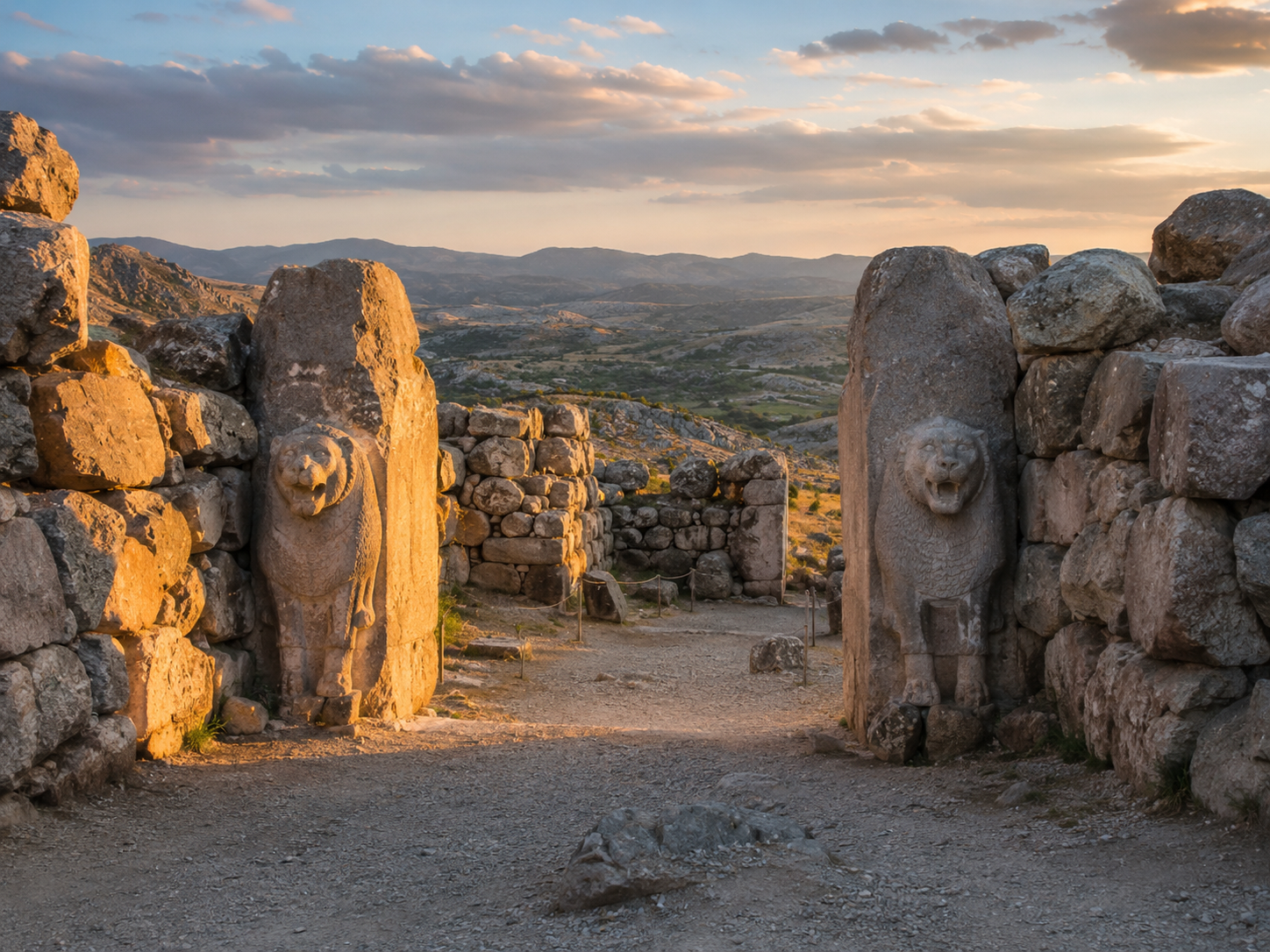
Some journeys lead to the sea, some to the forest, and some to the oldest voices in history. On the road to Hattusa, the landscape shifts into the simple, expansive scenery of Central Anatolia. As you approach Boğazkale in Çorum, you realize that the hills that seem quiet at first glance are actually holding thousands of years of history. This is not just an ancient city; it is an old capital that holds a very deep place in Anatolia’s memory.
Hattusa is located in the Boğazkale district of Çorum and served as the capital of the Hittites. According to the Cultural Portal, the city was inscribed on the UNESCO World Heritage List in 1986 and remained an important center in Anatolia for centuries as the capital of the Hittite Empire. Even this alone changes the way you see Hattusa, because here you encounter not only stone walls, but also the administrative, religious, and defensive system of an empire.
What makes Hattusa so captivating is its vast scale. As you explore the ancient city, it feels less like walking through a museum hall and more like moving through a grand open-air stage of history. The wind sweeps over the hills, passes through the stones, and reminds you that time moves differently here. Every gate, every wall, every rise feels like a silent trace left from the past.
One of the most impressive stops in the city is the Lion Gate. As one of the powerful examples of Hittite stone craftsmanship, this gate stands not only as an entrance point but also as a symbolic message to those approaching the city. The Cultural Portal notes that Hattusa features monumental gates such as the Lion Gate, the King’s Gate, the Sphinx Gate, and Yerkapı, and that the city walls were approximately six kilometers long during the Hittite period.
Another thing that makes Hattusa special is that it preserves not only architectural remains but also written memory. The cuneiform tablet archives found at the site have been included in the UNESCO Memory of the World Register since 2001. The same sources state that Hattusa is referred to as the “City of a Thousand Gods,” a phrase that reflects how important the city was not only politically, but also religiously.
Walking through Büyükkale, the Great Temple, Yerkapı, and the wall remains constantly carries visitors into a different era. The Governor’s Office of Çorum states that many structures and remains have been uncovered at Hattusa, including palaces and temples, thousands of tablets, monumental gates, granaries, the Hieroglyphic Chamber, and the Nişantepe Inscription. For this reason, Hattusa is not a place to visit briefly for a photo stop, but a wide area of discovery that should be explored slowly.
It is a good idea to allow plenty of time for the visit. Hattusa is located approximately 90 kilometers from Çorum city center, 29 kilometers from Sungurlu, and 1 kilometer from the center of Boğazkale district. Especially in summer, when the site is wide and open, a hat, water, and comfortable shoes make the visit much more enjoyable. For those who want to take photos, early morning or near sunset offers the most striking view of the stone textures.
When leaving Hattusa, what stays with you is not a flashy city crowd, but a profound silence woven into the stones. This silence is the most striking reminder of the order, belief system, and power the Hittites established in Anatolia. Hattusa should not be added to your travel list simply as an “ancient city”; it should be considered a special route to visit when you truly want to encounter the past.